



If the role of a Demand Planning Manager interests you, here’s an example of a job description taken from a job ad on MyCareersFuture:
Key Responsibilities
- Implement PSI (purchase/sales/inventory) management policy to subsidiaries and ensure the policy executed to achieve a healthy inventory level
- Deploy the Sales & Operations process, system and reports to all subsidiaries to improve the forecast accuracy and PSI management efficiency, as well as follow up on successful usage and continued training
- Ensure that all the subsidiaries adhere to PSI process timeline
- Complete the sales forecast and PSI submission with high quality, as well as prepare the PSI summary report weekly
- Provide regular reports and analysis on demand planning KPIs and performance metrics
- Analyse PSI and communicate with subsidiaries for the adjustment and approve the purchase requisition
- Involve the digitalisation tool requirement analysis, testing and training, and work with IT to fix issues raised by the subsidiaries
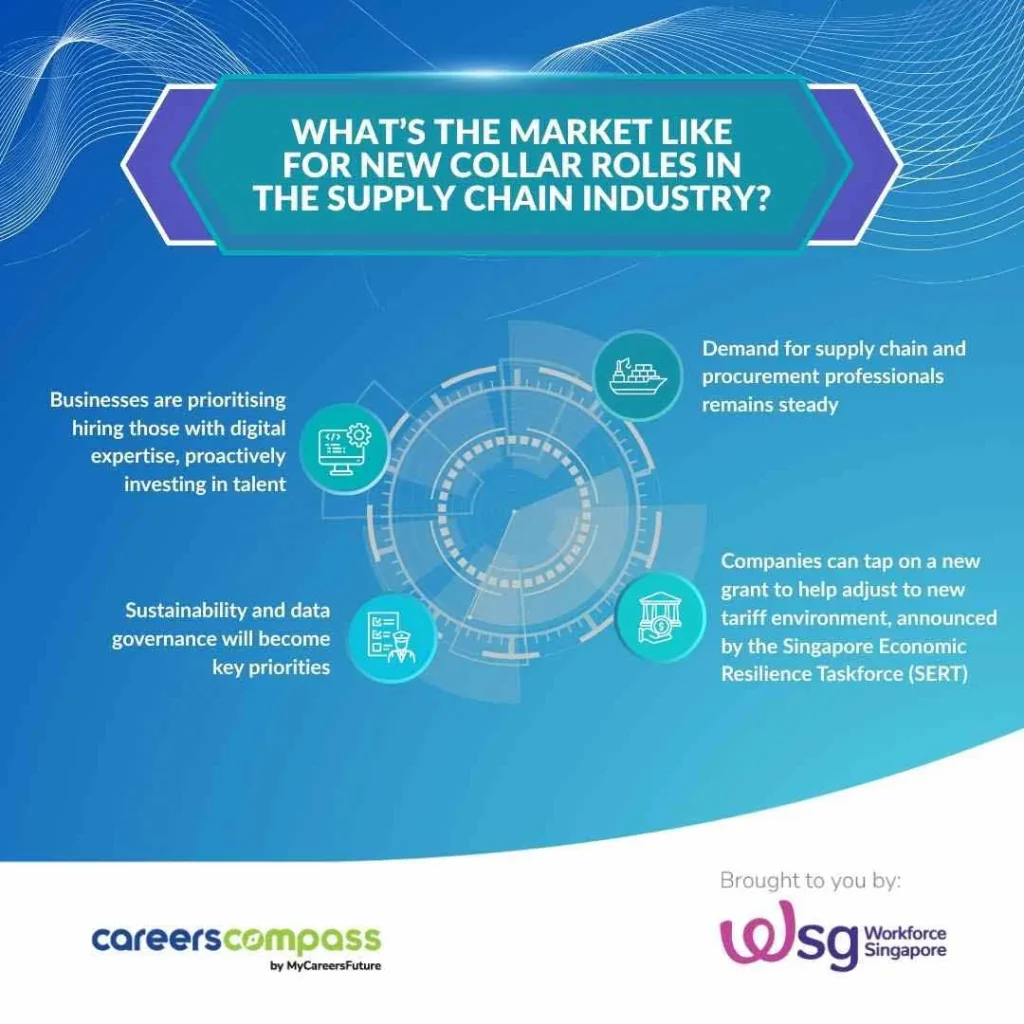
If you haven’t heard, “new collar jobs” are a new genre of roles requiring a combination of technical skills without the need for a specialised degree.
They’re gaining traction with employers, who are realising that formal education is not always the best indicator of capability — what truly matters is whether a candidate has the right skills and mindset to perform in a fast-evolving workplace.
Shangari Manoharan, Associate Director of Technical Practice at Michael Page, shares more about this genre of new collar role in the sector, and useful tips for jobseekers and career switchers about it.
Why are Demand Planning Managers considered “new collar”?
It’s increasingly data-driven and collaborative, with professionals entering from analytics or planning backgrounds. Practical forecasting skills and experience often outweigh formal academic degrees.
What has changed about it compared to its previous iteration?
Several market forces have redefined demand planning as a critical and tech-enabled function:
- Volatile consumer behaviour and frequent disruptions have made traditional forecasting methods insufficient.
- The rise of just-in-time models, omnichannel retail and e-commerce has increased complexity and the need for agile, responsive planning.
- Organisations now rely on advanced planning systems, or APS and real-time data from Point of Sales, or POS systems, market analytics, and external trends to build dynamic demand strategies.
- Digital transformation efforts in Singapore’s supply chain ecosystem have accelerated adoption of tools like SAP IBP, Oracle, and Kinaxis, redefining skill expectations.
What are the career and salary prospects of this role?
Mid-level managers earn between $6,000-$9,000. Senior roles with regional scope can reach $10,000-$15,000. It’s a critical leadership path in supply chain organisations.
What are the skillsets required to take up this role?
To succeed as a Demand Planning Manager, the following skillsets are critical:
- Technical competencies: Forecasting methodologies, demand-supply balancing, scenario planning, and proficiency with ERP and APS systems such as SAP IBP, Oracle or Kinaxis.
- Analytical skills: Strong command of Excel, data modelling and the ability to interpret market trends and historical sales data.
- Business acumen: Understanding of sales cycles, promotional impacts and financial implications of inventory decisions.
- Soft skills: Effective communication and stakeholder engagement to align planning across functions like sales, marketing, finance and operations.
Find your next job now on MyCareersFuture. 100,000+ jobs updated daily!
For mid-career switchers, what is necessary to move from another industry or job into this role?
Gain knowledge of planning software, start in inventory or supply analyst roles, and build forecasting experience. Courses in S&OP and demand planning (e.g., APICS) are useful. Develop hands on familiarity with planning tools and forecasting models coupled with Excel is essential as it will add significant value.
Is this role needed for more than one industry? What are the unique skillsets that would differ for this role from industry to industry that are worth picking up for better career health?
Crucial in FMCG, fashion, consumer electronics and pharmaceutical. FMCG requires fast, short cycle forecasting whilst pharmaceutical needs long range and highly regulated planning.
This article was done in collaboration with Michael Page.