


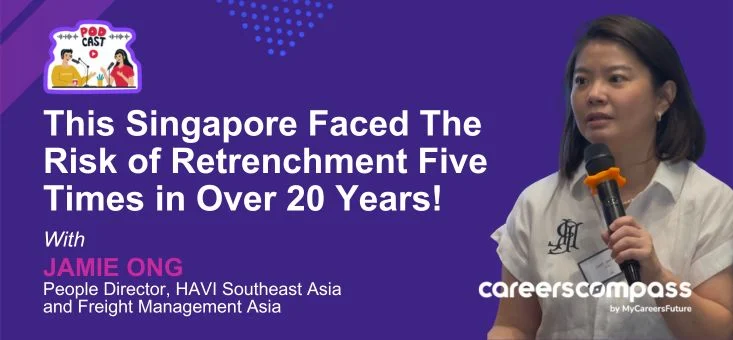
Jamie Ong leads the People and Communication function for HAVI Southeast Asia cluster and Freight Management Asia business.
She has been with the supply chain major since 2021, and has been focused on delivering diverse commercial growth, operations efficiency, talent development and digitalisation.
Jamie brings 20 years of HR experience to the table. Recently, she led her team to industry recognition at the HR Distinction Awards in Hong Kong and HR Excellence awards in Singapore.
But her two decades in the workforce has not always been so smooth sailing. In fact, Jamie revealed to us that in the course of her career, she’s experienced five merger and acquisitions (M&As).
These can be fraught with uncertainty, with outcomes ranging from an outright retrenchment by new company investors, internal restructuring that leads to joining a new department or team, to performing a completely different job role, she shared.
According to the Ministry of Manpower, these are the key things to take note:
- Your employer has the right to transfer you to another employer if the organisation is being restructured. A restructuring can involve a merger, take-over, sale of parts of the company or setting up a subsidiary company.
- You may be transferred to a related company such as a subsidiary, or to a totally unrelated company.
- Your terms or conditions of employment will remain the same, unless you agree to change them.
In terms of your rights in such situations, you have the right to:
- Be notified of the transfer and of matters relating to the transfer;
- Be given the opportunity to consult your employer; and
- Preserve the original terms and conditions of employment under the new employer.
Your current employer is required to:
- Notify the affected employees or their union of the impending transfer within a reasonable time.
- Inform affected employees about the terms of transfer, so that they or their union can hold consultations with the company.
- Ensure that there is no break in employment during the transfer.
- Ensure terms of employment are not less favourable after the transfer.
In the event you get transferred to a new company, your new employer is required to:
- Inform the previous employer of matters that will affect employees, so they can inform employees within a reasonable period.
- Take over the previous employer’s rights, powers, duties and liabilities which are part of any contract or agreement with the employees’ union before the transfer.
- Keep unchanged any terms or conditions of employment for the transferred employees, unless the transferred employees agree to a change.
Find your next job now on MyCareersFuture. 100,000+ jobs updated daily!
At a career event by Ethos BeathChapman, Jamie reveals more on the circumstances of these moments in her career, and puts on her HR director cap on to share tips on how to deal with such situations. She also talks about how to bounce back, whether it’s moving to a new job or staying in the organisation, and how to settle into the new reality fast.
Key Highlights to Listen to:
(2:45) To be retrenched, or reassigned to a new role during an M&A: Which is worse?
(3:52) How to improve your chances being retained in such situations
(5:23) If your career path changes, how can you settle into your next job fast?
Listen to this podcast and learn more here!
Follow us on LinkedIn for more expert career guidance and industry insights: Workforce Singapore on LinkedIn
Stay updated with the latest trends, job market shifts and career health advice from WSG.