


Today’s workplace is unlike any other. Step into any company in Singapore and you’ll likely see three or more generations working side by side: energetic Gen Z fresh grads, mid-career Millennial professionals, experienced Gen Xers, and senior employees who bring decades of wisdom and expertise.
Data shows that the employment rate for older workers aged 65 and above has risen from 24.7% in 2015 to 31.5% in 2025, indicating a growing presence of seniors at work alongside younger cohorts.
This multi-generational mix is exciting, but also complex.
Generational differences can spark fresh ideas and drive knowledge exchange and transfer, but they can also lead to tension in communication, career expectations — even work styles. What that means is that traditional “one-size-fits-all” arrangements and policies no longer work.
Sharpen your hiring strategy. Get top candidates on MyCareersFuture.
The good news? Companies that understand and embrace generational diversity see higher retention, stronger team collaborations, and a more innovative culture.
Tan Zemin, Lead Consultant at AKG Singapore, explains: “Employers should adopt inclusive leadership, mentorship, and reverse mentorship programmes, and focus on skills and potential over age. Flexible career pathways and clear expectations enhance retention and collaboration across generations.”
Read on as we explore the unique motivators of each generation, common friction points, and practical strategies for employers to turn multi-gen dynamics into a competitive advantage.
Understanding the multi-generational workplace: Key generational differences
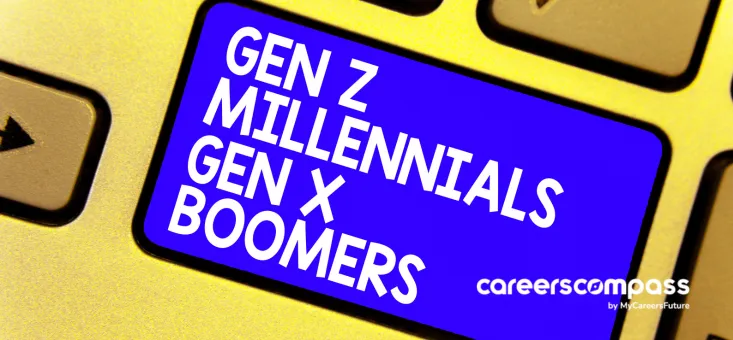
Singapore’s workforce spans Baby Boomers, Gen X, Millennials, and Gen Z, each with distinct motivators and needs.
Baby Boomers
Baby Boomers refer to individuals born between 1946 and 1964, making them 62-80 years old in 2026. They make up 20.7% of Singapore’s population as of 2025.
Historically, job security and loyalty were their priority, but today, their focus has shifted: “Older workers often value stability and meaningful contribution,” says Zemin.
Subash Krishnan, Coaching & Development Specialist at Ingeus, adds: “Their biggest motivator is purpose, legacy, and staying relevant. Having spoken to many employees in this space, they often ask: ‘Does my experience still matter?’”
Gen X
Individuals born between 1965 and 1980 are typically referred to as Gen X, placing them between the ages of 46-61 in 2026. They make up the second-largest generational cohort in Singapore.
Gen Xers watched downsizing wipe out the promise of lifelong careers. Subash notes how they value autonomy, trust, and work-life balance. “Gen Xers grew up navigating corporate restructuring and have learnt self-reliance,” Subash adds.
Millennials
Commonly defined as those born between 1981 and 1996, Millennials are 30-45 years old in 2026, a cohort that comprises 35% of the local labour force. Many are navigating key life milestones such as homeownership, career advancement, and forming families.
“Millennials entered the workforce during rapid change, so they look for growth, learning, and meaningful work,” Subash says. “I often get pushback from Millennial employees when the work becomes routine or lacks meaning.”
Gen Z
Born between 1997 and 2012, Gen Zs in 2026 fall between 14 to 29 years old, making up about 16% of the country’s labour force. Gen Z has never known a world without smartphones — they are digital natives shaped by economic instability and the pandemic.
“Gen Z values psychological safety, flexibility, and belonging,” Subash shares. “My daughter lands in this space, and her remarks touched the three motivators — she does not want to be overly managed, wants to belong to a team, and expects empathetic colleagues and bosses.”

Common challenges in managing multi-generational teams
Different generational perspectives can strengthen organisations. But when expectations around communication, technology, and career growth are misaligned, friction can emerge. Common challenges tend to fall into three areas:
1) Communication and feedback expectations
Communication differences often surface first. Howard Lau, Principal Consultant at StaffKing, notes that younger employees often rely on text-based communication, while older workers value traditional methods shaped by earlier workplace norms such as formal emails.
These differences extend to feedback expectations. “For older generations, if there is no feedback given about their performance, it means ‘all is well,’ but younger employees may require more frequent feedback to feel emotionally at ease,” Subash says.
Employers can address this by:
- Defining when to use email, messaging platforms, or meetings
- Setting shared response-time expectations
- Moving beyond annual reviews towards regular, structured check-ins
2) Adapting to technology and new ways of working
Rapid technological change is reshaping how productivity is defined across workplaces. While younger employees often see AI and automation as opportunities, some senior employees may view them as threats.
At the same time, expectations around work ethic differ, with traditional models emphasising visibility and hours worked, while younger employees prioritise outcomes, flexibility, and autonomy.
Organisations can respond by:
- Providing practical, judgement-free digital and AI upskilling
- Introducing reverse mentoring programmes
- Shifting performance metrics from hours logged to results achieved
- Training managers to lead hybrid and flexible teams effectively
3) Career growth and stability expectations
Generations often approach career development differently. “Older generations stayed at the workplace for long periods and honoured loyalty to the company,” Subash notes.
Younger employees, however, have entered a workforce marked by economic disruption and rapid industry change. Stability can feel uncertain, making agility and skill development more attractive than long tenure.
Moreover, digital exposure to diverse career paths has normalised experimentation and lateral movement.
Employers can bridge expectations by:
- Offering internal mobility and project-based opportunities
- Supporting skills-based promotions
- Creating flexible career pathways that allow growth without job-hopping

Strategies for managing multi-generational teams
If friction points reveal the challenges, the next step is intentional design. According to Subash, organisations that successfully integrate multi-generational teams do so by rethinking flexibility, career development, and learning structures — not just policies.
1) Design flexible career and work models
Flexibility today goes beyond hybrid arrangements. It involves creating career structures that adapt to different life stages and ambitions. Practical approaches include:
- Phased retirement programmes, allowing senior employees to transition into advisory or mentoring roles
- Portfolio roles, where employees balance core responsibilities with innovation or mentoring work
- Internal gig marketplaces that enable cross-department skill development without leaving the organisation
2) Encourage cross-generational learning and inclusive leadership
In multi-generational workplaces, learning must flow both ways. As Subash explains: “Gen Z teaches senior leaders AI tools, social media trends, and automation, while senior leaders teach decision making and stakeholder management.”
Make better hires, faster. Join thousands of employers on MyCareersFuture today!
Combining traditional mentorship with reverse mentoring strengthens collaboration, builds empathy, and accelerates capability development across teams.
Leadership behaviours also play a key role in bridging generational misunderstandings. Howard emphasises perspective-taking: “No generation is better than another. Looking through another person’s experience helps build understanding.”
Organisations can support this through:
- Microlearning platforms
- Learning wallets
- Cross-generational project teams
3) Strengthen purpose and wellbeing
While each generation may define purpose differently, meaning and wellbeing remain universal drivers of engagement.
Subash highlights initiatives such as volunteer leave, wellbeing days, and purpose-driven storytelling as powerful retention tools. Employees are more likely to stay when they see how their work contributes to broader impact.
Multi-generational workplace diversity is now a defining reality of Singapore’s workforce
The organisations that thrive won’t be the ones that try to flatten differences, but the ones that evolve and design for them.
When employers move beyond stereotypes and focus on skills, purpose, flexibility, and shared outcomes, they unlock the combined strengths of every generation and position their organisations to thrive.
Follow us on LinkedIn for more expert career guidance and industry insights: Workforce Singapore on LinkedIn
Stay updated with the latest trends, job market shifts and career health advice from WSG.