


Watch Here to Learn Key Networking Do’s and Don’ts for Building Great Professional Connections!
Yes, we live in a digital-first world now, so updating that LinkedIn profile is crucial for career and job search success. But the fact is, doing so isn’t a guarantee of success. After all, what you do online is just one effort out of many others doing the same thing, in the same way.
The surprising truth is that while having an online presence matters, it still takes in-person networking to reveal the true opportunities for your career. Research has shown that a face-to-face request is 34 times more successful than an email!
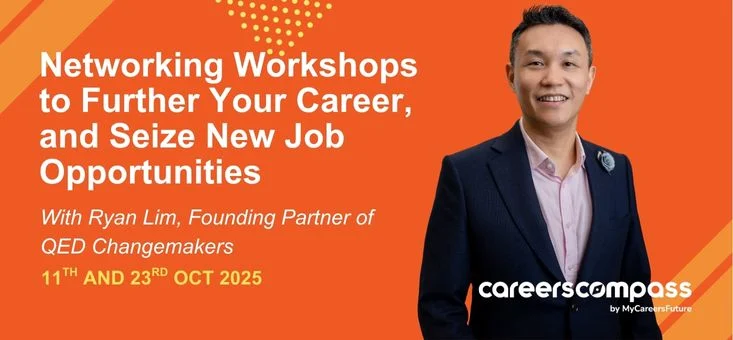
Ryan Lim, a pioneer in social media marketing, with over 15 years of digital marketing experience, believes that the choice to do your networking digitally versus in-person is not binary. You need both online and onsite for effective networking.
His book, Business of Networking, distils tips drawn from Ryan’s experience gathering more than 3,500 senior leaders and board directors across Asia for QED Changemakers, a digital management consulting firm, where he is its principle consultant and founding partner.
Shifting away from Asian sensibilities in networking
There are differences between Southeast Asian networking styles, compared to other regions in the world, Ryan shared.
“Asians are quiet, prefer one-to-ones, tend to be passive, often with a forced humility, and lean towards letting their work speak for themselves.”
“On the other hand, other regions tend to be louder, more proactive, opinionated, and passionate,” he added, which arguably gives them an edge when it comes to their careers and networking in general.
Returning to the argument between online and in-person networking, Ryan believes that online is good to establish your visibility, while onsite in-person networking helps when it comes to building credibility.
“It is important to have a balancing act for both with integrity, to build a trustworthy reputation.”
He also shared more tips on networking for different career goals here.
Networking for “sponsorship”
According to Ryan, there is a difference between seeking a mentor, a coach, and a sponsor at the workplace.
A coach will help improve your skills, while a mentor can give you advice, but it’s really sponsors who will advocate for your career progression proactively, he believes.
His advice for finding a great sponsor:
- Look for those who have a “seat at the decision-making table”;
- Connect with those who understand or are involved in your work, usually within your workstream, vertically or horizontally;
- Build ties with those who like you, trust you, want the best for you, and are willing to advocate for you;
- And when the moment comes, don’t be shy to speak up and ask them to be your sponsor!
Networking for a job within, or outside your current industry
Much like those who work in insurance, Ryan believes effective networking for jobs involves connecting and making plenty of friends in different industries, even before you are in job-hunting mode.
At the same time, it’s also crucial to let folks know you’re open to new career opportunities. After all, no one will know you’re looking if you don’t say so.
Here’s some other tips he shared:
- Share your views, skills online (eg. LinkedIn) so people know of you and what you’re good at;
- Be nice and proactive (that you are open for opportunities) without being overly aggressive and desperate; and
- Keep in touch with leaders in your industry, before you ask for a job. Be consistent in your conversation cadence, and keep in touch throughout, instead of only reaching out when you want or need a job.
Networking at professional events
Ryan shares in his book how the fundamental of conversation at professional events is to be interested, not interesting.
This means not to overly focus on trying to make yourself stand out by the quality of your opinion and talk, but rather actually be a good listener, interested in what others have to say, and bounce off their topics instead.
In addition, make sure to do the following:
- Aim to make friends and build relationships, not simply collect name cards and contacts;
- Do your homework about who’s turning up at the event whenever possible;
- Always follow-up after the event, and be patient and persistent; and
- Lastly, remember to try and apply value wherever you start a connection — give more before you ask of something. Everyone loves a giver!
- Also, learn how to network or go to networking events so you can know more people, potentially more job opportunities!
Follow us on LinkedIn for more expert career guidance and industry insights: Workforce Singapore on LinkedIn
Stay updated with the latest trends, job market shifts and career health advice from WSG.