



If the role of a Supply Chain Analyst interests you, here’s an example of a job description taken from a job ad on MyCareersFuture:
Key Responsibilities
- Responsible for daily end-to-end operations; consisting of Supply Planning, Order Fulfilment, Procurement, Shipping and Warehousing to result in operations excellence.
- Review weekly reports on the schedule delivery date, as well as weekly gap reports
- Work out the delivery plan for goods and allocation for direct shipments
- Follow through the direct shipments’ status
- Disseminate Purchasing Order Report information to all functions
- Liaise with Global Supply Chain team on the supply of the first Purchasing Order, Last Time Buy as well as depleting models
- Monitor compliance status, to liaise for the first lot of receiving of goods
- Follow up on new and special stock enquiries from all stakeholders and pro-actively reply and provide recommendations
- Resolve misalignment on shipping documents with vendors for CRM
- Arrange samples, claim damages/missing goods with vendors , while also Handling distributors’ complaints
- Manage supply chain inventory matters such as reverse inventory for returned goods from distributors or out to vendors, issuing PO, arranging intercompany shipments, reconciliation of goods receipt and payment issues, etc
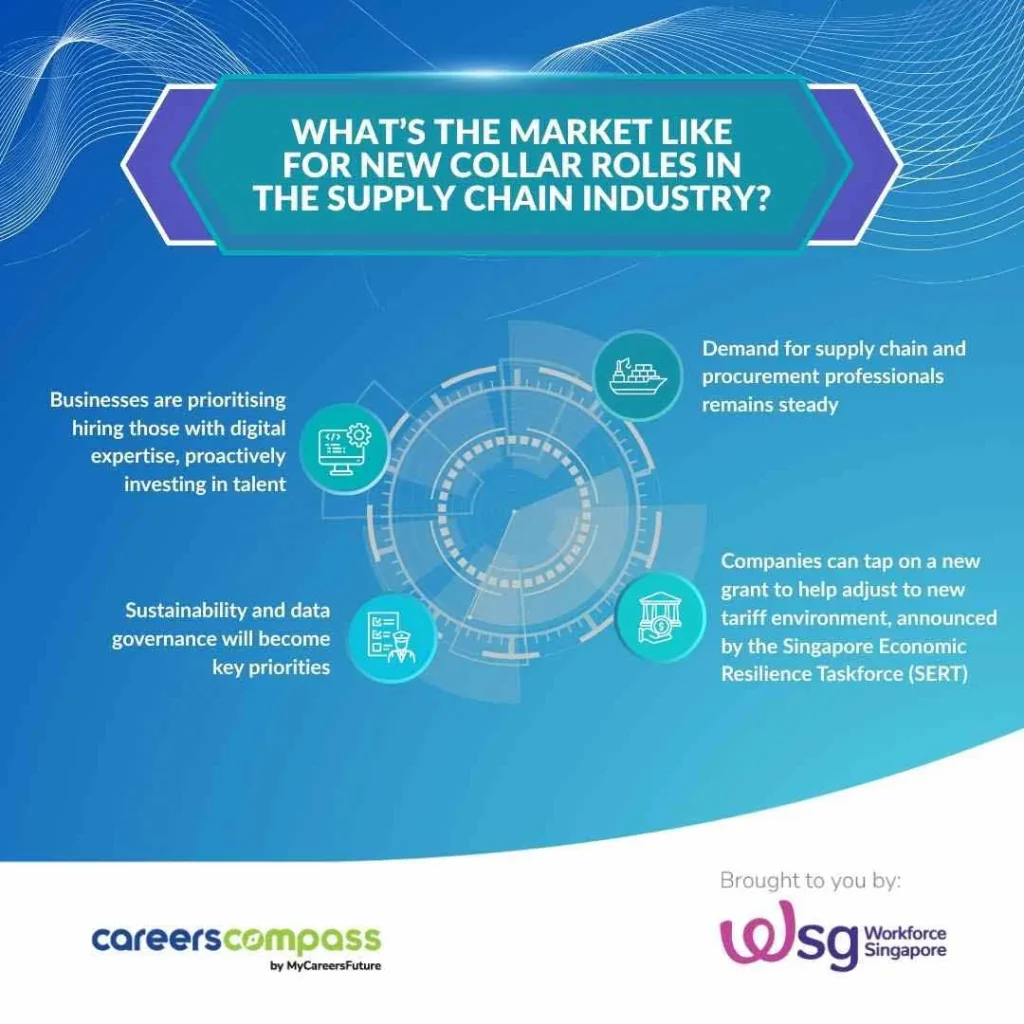
“New collar jobs” are a new genre of roles requiring a combination of technical skills without the need for a specialised degree.
Employers are coming round to the fact that formal education is not always the best indicator of capability — what truly matters is whether a candidate has the right skills and mindset to perform in a fast-evolving workplace.
Shangari Manoharan, Associate Director of Technical Practice at Michael Page, shares more about this genre of new collar role in the sector, and useful tips for jobseekers and career switchers about it.
Why are Supply Chain Analysts considered “new collar”?
The integration of digital tools and data analytics into supply chain management has led to the emergence of roles such as Supply Chain Analyst. They are required to utilise data to identify trends and optimise processes.
What has changed in the sector that has led to this role becoming prominent and needed?
Three key factors explain why Supply Chain Analyst are becoming essential in Singapore’s supply chain landscape:
- driving innovation
- adaptability
- sustained competitiveness
Singapore’s Smart Nation vision is accelerating digital transformation through AI, robotics, IoT and data analytics in supply chain operations.
As technology reshapes traditional roles, rendering some obsolete, government initiatives like Career Conversion Programmes and SkillsFuture support workforce reskilling into new collar positions.
Additionally, recent global disruptions such as COVID-19 and geopolitical tensions have exposed supply chain vulnerabilities, increasing demand for professionals equipped to build resilience and navigate complexity.
Looking for a new role? Explore over 100,000 jobs available on MyCareersFuture now!
What are the career and salary prospects of this role?
New collar roles in Singapore’s within supply chain function offer strong career prospects with competitive salaries, reflecting the specialised technical skills required in data analytics, automation and supply chain management.
Entry level salaries for Supply Chain Analyst typically range from $3,000 to $5,000 per month.
For experienced professionals at mid-level would typically earn $6,000 to over $10,000+ per month.
Supported by government training programmes and industry certifications, these roles provide clear pathways for career advancement and cross-functional mobility, making them attractive options for those looking to grow in a rapidly evolving, technology enabled supply chain landscape.
What are the skillsets required to take up this role?
In order to take up a Supply Chain Analyst role, it requires strong technical skills such as data analytics and digital tools proficiency, including the ability to analyse data using Excel, Tableau/Power BI and ERP systems to optimise operations, along with a solid understanding of core supply chain functions like demand planning, inventory management and logistics often supported by relevant certifications. Equally important are soft skills like problem-solving and analytical thinking, which are essential for optimising processes and making data driven decisions in complex environments.
For mid-career switchers, what is necessary to move from another industry or job into this role?
For mid-career switchers aiming to enter new collar supply chain roles in Singapore, targeted reskilling in data analytics, digital tools and core supply chain knowledge would be essential. Gaining practical experience via internships or projects, leveraging transferable skills such as effective communication, problem-solving and project management.
Is this role needed for more than one industry? What are the unique skillsets that would differ for this role from industry to industry that are worth picking up for better career health?
New collar supply chain analyst roles are emerging to be essential across multiple industries from manufacturing, retail to healthcare and e-commerce.
This is due to the universal need for efficient and tech-enabled supply chain management.
However, unique industry demands shape specific skillsets: For example, healthcare supply chains require strict regulatory knowledge and cold chain logistics expertise, while e-commerce focuses heavily on last mile delivery optimisation and customer experience analytics.
Professionals should combine core supply chain and digital skills with sector-specific knowledge to stay competitive.
This article was done in collaboration with Michael Page.