


According to a report by the Singapore National Employers Federation, 72% of employers faced uncertain business prospects this year, up from 58% in 2024.
The survey, which aimed to understand employers’ business sentiments, manpower challenges, hiring plans, wage outlook and HR priorities, also found a more cautious wage outlook.
ManpowerGroup’s Q1 2026 Singapore Hiring Sentiment report also found the following:
- 18% of employers reported they are anticipating staff reductions
- 46% of employers planned to keep staffing levels unchanged
- 32% of employers said they planned to increase their staff in Q1 2026
- 4% were unsure how staffing levels would change in the months ahead
All these make for very uncertain times ahead, but as the saying by famous Greek philosopher Heraclitus goes, “the only thing that is constant is change itself”.
We understand planning for your career and how it might be changing in the coming year can be hard in these times, especially for young workers and fresh graduates who are new to the workforce.
From job security, to reskilling and upskilling, and job redesign, it’s safe to say one way or another, something will change in 2026 for Singaporean workers, given how employers are also looking to evolve in these troubled economic times.
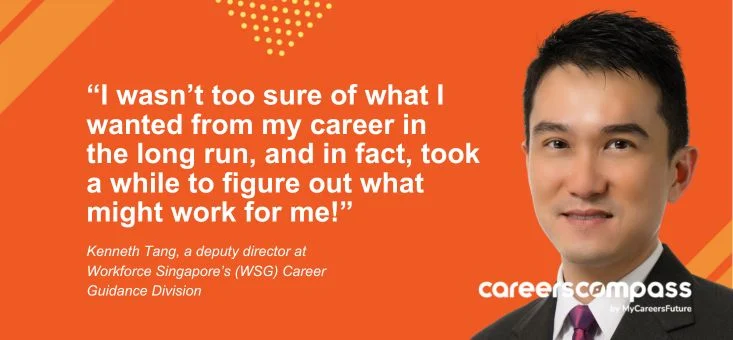
Kenneth Tang, a deputy director at Workforce Singapore’s (WSG) Career Guidance Division, shared how he is no stranger to career twists and turns.
In fact, he started out his career as an engineer working in a chemical plant, moved into education for a few years, before finding his current employer at WSG. Even within the organisation, he has had a change of portfolio a few times!
Similar to the challenges fresh graduates and young workers face, it wasn’t smooth sailing to know what he wanted from his career, despite majoring in engineering at university.
“(At first), it seemed natural for me to find work related to my studies”, Kenneth said.
“While it was exciting and exposed me to many new experiences, I realised it might not be what I wanted, but yet I wasn’t too sure of what I wanted from my career in the long run.
“In fact, I took a while to figure out what might work for me!”
Planning out your 2026 career strategy
With 2026 expected to be challenging, Kenneth shared some advice for young Singaporeans planning career pivots and career strategies.
Successful transitions require thorough groundwork, he believes. This includes developing a clear career plan and conducting reality checks through networking with industry professionals before they make a career move.
“Speak to our career coaches through Polaris by WSG to obtain career clarity and develop a personalised career development plan, or obtain career clarity”, he said.
“Obtain industry insights on sectors you might want to move into through networking, or connect with WSG’s Volunteer Career Advisors as well!”
Ultimately, all Singapore workers will need to embrace lifelong learning even if we are not transitioning immediately.
“With artificial intelligence (AI) becoming essential across roles, acquiring complementary skills like data analytics, visualisation, or presentation abilities can accelerate career progression and provide future flexibility”, Kenneth shared.
How to overcome challenges when dealing with change
Of course, there will be challenges that young workers and jobseekers have to face, particularly if a career transition to another industry is necessary.
Here are some challenges that tend to come up:
Barriers to change:
Cultural and Social Pressures
- Singapore’s cultural emphasis on stability and linear career progression can make lateral moves or industry pivots seem like backward steps.
- Social expectations around maintaining steady progression and financial security also discourage workers from taking calculated risks to make a transition, even when their current industry shows declining prospects.
Job hunt smarter, not harder. Find fresh listings every day on MyCareersFuture.
Lack of Self-Awareness and Fear of Failure
- Many young workers are uncertain about their next steps, as they may not fully understand their transferable skills or know where their passions truly lie, making it difficult to make a transition.
- Others are held back by the fear of failure – whether from doubts about succeeding in a new industry or concerns about mastering the required skills.
Financial Pressures
- With higher living costs in Singapore and family obligations due to our aging population, many workers cannot afford to take pay cuts during transition periods or invest time in retraining without income.
- The fear of financial instability often prevents people from making career transitions.
Having a growth mindset when it comes to career change
Kenneth shared: “Once you have addressed these concerns and gain the confidence to start the journey, then the next steps of formulating a career plan and executing it will be more meaningful, and perhaps more successful.”
In addition, it is important to pause and reflect on the skills and experience you have accrued thus far. More often than not, successful career pivots require leveraging your existing strengths but re-contextualised by adding new skills and capabilities.
This will allow you to change your career trajectory more easily than someone who is just switching careers impulsively.
Similarly, once you have acknowledged your foundation of both hard and soft skills, adopting a growth mindset is the next key step. Individuals with a growth mindset see the obstacles of career switching as a journey, embrace challenges, and learn from mistakes to springboard and supercharge their development. Setbacks will be inevitable, but how you react and respond will play a vital role in your success.
Kenneth concluded by offering some advice to younger workers, saying: “If I could speak to my younger self at 28, I would say speak to people who have been there and done that – find a mentor and learn from their stories.”
“You might just shorten the journey you need to go through to find what works best for you!”
Ready to launch your career? Join our LinkedIn community for advice, tips, and job search strategies tailored to new graduates like you.
Follow Workforce Singapore on LinkedIn
Get the latest insights to kickstart your career journey with confidence!