



Have you been going through the motions at work — doing what’s needed, but feeling disconnected or unsure if this is still the right path for you? You might not be overwhelmed or burnt out, but something feels off. That subtle sense of unease, of slowly drifting from your sense of purpose? That’s what some are now calling quiet cracking.
Unlike quiet quitting, where someone deliberately pulls back, quiet cracking is more emotional than intentional. The good news is, you’re not alone — and you’re not stuck. Quiet cracking can be a wake-up call. And by gently tuning into your career health, you can begin to regain that clarity, direction, and energy you may have lost along the way.
Looking for a new role? Explore over 100,000 jobs available on MyCareersFuture now!
What is quiet cracking?
Quiet cracking often looks like this: You show up, you deliver, you smile when needed — but deep down, there’s a persistent dullness. You’re no longer excited by your work, but you’re also unsure what else you want. It’s not dramatic. You’re not slamming doors or updating your resume. But slowly, you’ve stopped asking “What’s next?” and started asking “Is this all there is?”
It describes a persistent sense of burnout and stagnation that gradually leads to disengagement, poor performance, and a quiet urge to quit. It’s a slow unravelling that doesn’t always show on the surface, but it’s deeply felt.
TalentLMS, the learning management company that coined the term, found that one in five employees experience quiet cracking frequently or constantly, while another 34% report experiencing it occasionally. That means more than half the workforce may be quietly struggling — which means they’re caring too much to walk away, but too drained to keep going.
Why does quiet cracking happen?
For many workers, there isn’t a single cause, and that’s what makes it so hard to spot. Quiet cracking is often the result of a combination of personal and professional shifts that quietly build over time. Some common reasons include:
- A loss of meaning or connection to your work. You may feel like what you do no longer aligns with who you are or what you value.
- Career stagnation. You haven’t been growing, learning, or moving forward in a while, and the future feels unclear.
- Changing life priorities. As family, health, or financial needs evolve, your job may no longer feel like the right fit, but you’re unsure how to make a move.
- Lack of recognition or support. You’re putting in the effort but not being seen or heard, and over time, that’s wearing you down.
- Burnout recovery. Sometimes, a quiet cracking follows burnout. You’ve survived the worst of it, but now feel hollow or unmotivated.
If any of these resonate with you, know that you’re not being “difficult” or “ungrateful”. You’re human, and your sense of purpose and fulfilment deserves care and attention.
Why your career health matters
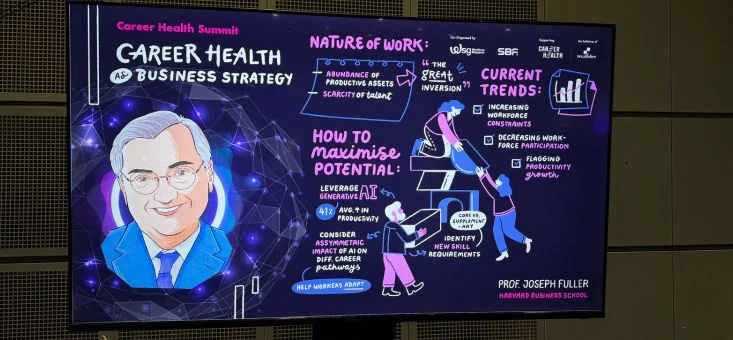
Career health isn’t just about promotions or pay. It’s about feeling empowered to shape your career path with clarity and confidence, no matter your age or stage. When your career health is in good shape, you feel more hopeful. You’re better equipped to ride out challenges. And most importantly, you’re able to make career choices from a place of strength, not survival.
Take the career health quiz here!
If you’re quietly cracking, give yourself credit for noticing it. That’s already a sign of awareness — and a starting point for change. Here’s how you can begin caring for your career health, one step at a time:
1. Pause and reflect
It’s okay to outgrow your old goals. Ask yourself: What does fulfilment look like now? What parts of your current role energise you, or drain you? These reflections can guide you back to what truly matters.
2. Explore new possibilities
Sometimes we feel stuck not because there aren’t options, but because we can’t see them yet. If you’re unsure about which roles might suit you, tapping into CareersFinder on the MyCareersFuture portal is a helpful first step.
Based on your skills, work experience, and interests, it recommends job roles that could align with where you are — and where you want to go. You can even save the roles that resonate most with you, giving you a starting point to revisit and reflect on as you plan your next steps at your own pace.
3. Learn something new
Upskilling doesn’t have to mean jumping into a full diploma programme or making drastic changes overnight. With SkillsFuture courses, you can ease into learning — whether it’s brushing up on digital tools, leadership skills, or communication.
Sometimes, even a short course can rekindle your curiosity and give you that boost of confidence you’ve been missing.
4. Seek guidance
You don’t have to figure things out alone. If you’re employed but feeling directionless, consider tapping on Polaris, a suite of personalised career guidance programmes by Workforce Singapore tailored for those who want to grow within their current jobs or explore new possibilities.
5. Start career check-in
Try journaling your work experiences — what feels meaningful, what doesn’t, what you’re curious about. Over time, these notes can help reveal patterns and new directions worth exploring.
You deserve to feel whole again
Quiet cracking isn’t a failure. It’s a call to reconnect with yourself. To listen to what your inner voice is trying to say. And to remember that your career isn’t something that just happens to you — you have the power to shape it.
So if you’ve been feeling disconnected or unsure of where you’re headed, know this: You’re not alone, and there are gentle, practical ways to find your way back. Your career health is something you can nurture. And in doing so, you just might rediscover not only your path, but also yourself.