


In a recent interview with Money FM, Workforce Singapore’s Principal Career Coach Noel Ang shared his thoughts on mid-career reinvention for middle-aged Singaporeans. Here’s what he said on these key topics.
Accepting career change is necessary — here’s how to break past perceived barriers
As a career coach, I see several key factors driving people in their 40s and 50s towards second careers.
The biggest driver is how work has changed from the way we’ve previously known it. Many professionals start their careers expecting job security and steady progression. But technology has disrupted the way we work. We are seeing roles like call centre agents and payroll accountants being offshored.
Apart from displacement, for some, after decades working in the same job in the same sector, many feel disconnected from their work. They lose their passion, they lose their drive, and they want to re-experience it again elsewhere.
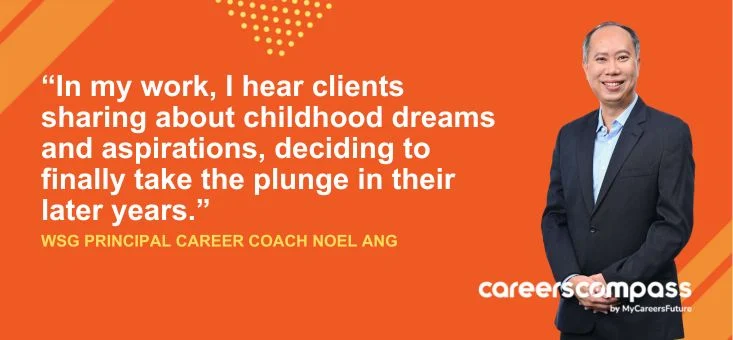
In my work, I hear clients sharing about childhood dreams and aspirations. They wanted to work in healthcare, social service in their younger days, and they finally decided to take the plunge to pursue these paths in their later years. But there are significant barriers holding people back.
Considering a mid-career switch? Get expert help. Book a free job search advisory session now.
First on their list is always the financial obligations — the biggest hurdle, especially for the sandwiched generation these days, who are caring for both the elderly as well as children. When you do a career reset, what it means really is to start over at entry-level salaries. This is a big personal hurdle to cross, when you are used to a much higher salary!
Then of course, there are skill gaps. To switch sectors, you often require extensive week training, which could take half to a full year. It’s a significant monetary investment with no guarantee of success.
Some may worry about competing with younger candidates who may appear more adaptable to new technologies and workplace changes, or who might be receiving a lower salary.
How to access your readiness for a career change
Actually, it’s not difficult at all. You start with self-assessment. Understand your values, your interests, and your plans for the skills you need to acquire. Then, test water through volunteering or some part-time work in your target field before picking the change.
Always remember, a second career doesn’t mean starting from scratch. You are leveraging decades of experience, wisdom, and professional networks in new contexts.
As such, consider working with a career coach or an industry-specific volunteer career advisor from WSG who can provide useful sectoral insights.
Managing finances when it comes to a career change
Preparing for pay adjustments requires both practical financial planning and a lot of psychological preparation. The reality is that most individuals that take on a second career will face some reduction in income. This is the reality. Hence, there is a need to adjust your lifestyle accordingly until your income goes up again.
Before making a career change, test your tolerance to live on a lower income first. Live on the projected new salary for several months while earning your current income. This will provide a financial cushion and also a realistic preview of your new lifestyle, what it feels to be like.
Also, build a transition fund of 12 to 18 months expenses.
I had a client who went for training and had to save for two years to cover his retraining period with no income. This mental retraining is very crucial. After years of salary increases, accepting a pay cut can change your sense of progress.
So I reframe it as such: I help clients redefine success beyond money, just on job satisfaction, work-life balance, and values alignment. And have a family conversation with your loved ones about your career plans. It is so much easier when you have the support of your loved ones to share with you.
Remember, initial pay cuts aren’t always permanent. Your previous experience combined with fresh skills often has led progression in the new field, o you should view the financial change as an investment, not a loss!
Follow us on LinkedIn for more expert career guidance and industry insights: Workforce Singapore on LinkedIn
Stay updated with the latest trends, job market shifts and career health advice from WSG.